Sunday, November 08, 2015

Mark 12:38-44 (32nd Sunday in Ordinary Time, November 8, 2015)

Gospel:

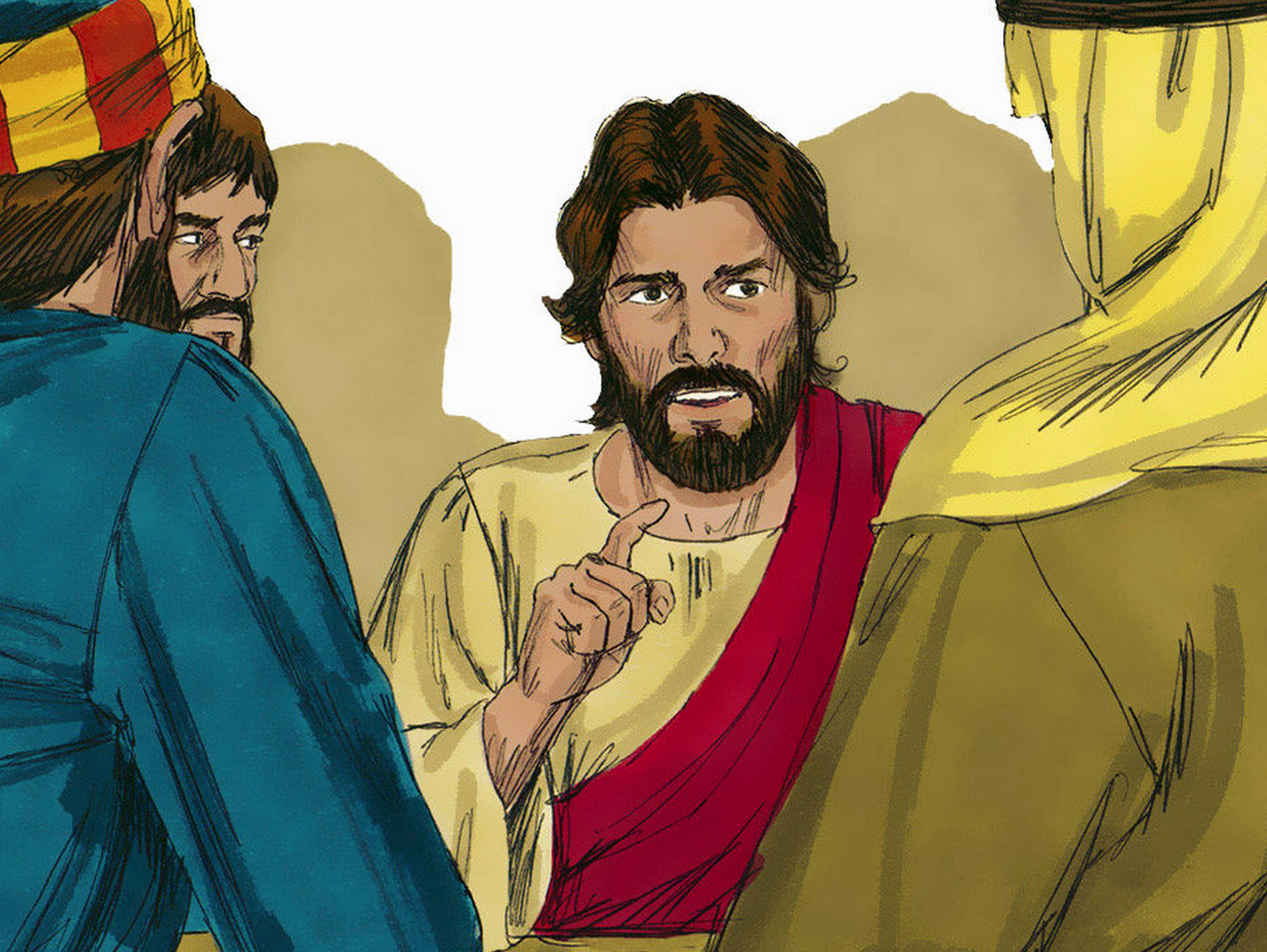
In the course of his teaching Jesus said to the crowds, “Beware of the scribes, who like to go around in long robes and accept greetings in the marketplaces, seats of honor in synagogues, and places of honor at banquets. They devour the houses of widows and, as a pretext recite lengthy prayers. They will receive a very severe condemnation.” 

He sat down opposite the treasury and observed how the crowd put money into the treasury. Many rich people put in large sums. A poor widow also came and put in two small coins worth a few cents. Calling his disciples to himself, he said to them, “Amen, I say to you, this poor widow put in more than all the other contributors to the treasury. For they have all contributed from their surplus wealth, but she, from her poverty, has contributed all she had, her whole livelihood.” 

Gospel Trivia:

There is a small trivia that makes a world of difference in appreciating this gospel: the poor widow gave TWO small coins.  This is significant because the widow could have kept one of the coin, and given the other.  Instead, she gave everything she had.

Widows are also often the poorest in society.  Without a husband to take of the family, the widow often has to fend for herself and her family.  Note also that scribes are not "paid" for exercising their profession, and relied on contributions from the members; yet some abused the generosity of some members, including that of widows.

Mark, the evangelist, paints the contrast between those who were possessed by material things, and the one who is detached and gave up all.  Such is the requirement from a disciple.

Reference:

A Kingdom for All, pages 94-95.
  

Sunday, November 01, 2015

What or Where are Heaven, Hell and Purgatory? (Nov. 1, 2015, All Saints' Day)

Gospel Trivia:

In lieu of the feasts of All Saints and All Souls, this article will present explanations to better understand the notions of "heaven", "hell" and "purgatory."  These explanations are based on the Catechism of the Catholic Church (CCC) and the Catechism for Filipino Catholics (CFC).

As Christians, we firmly believe that life does not end in death; that there is a reality after death.  Unfortunately, no one has returned from the world after death to tell us all about it.  We have a rough idea of what awaits us through the Resurrection of Jesus.  I say a "rough idea" because Jesus' disciples did not have a video camera at that time, but the gospels provide us clues as to what happened to Jesus after his death.

What happened in the Resurrection?

The Resurrection of Jesus is not just a resuscitation (as in the case of Lazarus, who eventually died), but that of transformation (Jesus lives forever).  Resurrection refers not only to a physically risen Jesus, but to a spiritually Risen Jesus.

Our Risen Lord was no longer bound by time and space. He could walk through walls. In the account of the “doubting Thomas” in John 20:19-29, the evangelist recounts that “the doors were locked” (stated twice, in fact); and yet Jesus suddenly appeared to them.

In the story of the two men on the way to Emmaus in Luke 24:1-53, we learn other aspects about our Risen Lord. We know that the tomb was empty and his body rose and changed (24:12). His body changed because when Jesus appeared to the two men on the road to Emmaus, he was not readily recognizable (24:32), and yet he could be seen and touched, and he ate bread and fish.  

I’m afraid that is as much as we can know about Jesus Resurrected presence.  But one thing we do know: Jesus was not just resuscitated; he was transformed to a glorious presence.

The closest analogy I can think of is that of a caterpillar that is transformed to a butterfly. It dies as a caterpillar and transforms to something totally new.

Heaven

Since we are creatures bound by time and place, we often think of heaven as a "place."  We imagine heaven as something out there, filled with clouds and perhaps angels singing and playing the harp.  

I believe this is such a limited view of what heaven could be. Scripture encourages us to extend our imagination and think of heaven as:

- instead of a place, a condition of being with the Lord (CFC 2068), or as the beatific vision, i.e. the vision that makes happy (CFC 2069);

- an eternal life, not in the simplistic sense of survival and living forever, but a new quality of life that we cannot even imagine; Scripture can only describe such a life in images that connotes and connects with what is dearest and most joyful to us, such as: a kingdom where God reigns, wedding feast, a new heaven and new earth, a perpetual light.  (CFC 2063, 2065)

This mystery of a condition of being with God is beyond all understanding (CCC 1027).  "No eye has seen, nor ear heard, nor the heart of man conceived, what God has prepared for those who love him" (1 Cor 2:9).

Because we communicate in human language, we are necessarily limited by the words and images we used.  We should therefore be conscious that the words that we use to describe "heaven" are, at most, feeble attempts to describe what it could really be.  

For example, when we say that heaven is where we see God face to face, we do not mean that we would be inches away from God's face. It suggests that if God is the powerful loving and merciful Father revealed to us by Scripture, then being intimately close to him must be such a special and overwhelming experience which would last for a long, long time.

I recall when I first saw Pope John Paul II in St. Peter's Square.  We were a good 50 meters away from him, but just seeing this man who is so close to God and whose holiness is almost palpable, filled me with awe, inspiration, a sense of humility, and realization of goodness in this world -- all rolled into one ball of such wonderful feeling.  Can you then imagine what it would be like when we "see God"? 

Hell

If heaven is a condition of being with God, then hell would be where God is totally absent.  If God is absolute and unconditional love, then hell is the absolute absence of love.  

God does not send someone to hell, for how can a loving God send his most loved creature to eternal fire?  God loves freely, and our Father loves so freely that he allows us to reject that love.  If someone chooses to live a self-serving, self-centered life that results in ultimate irrevocable self-exclusion from God and from all other creatures, then that person himself/herself chooses to go to hell.  

The fundamental choice that this person has taken in his/her life is a total rejection of God and of a life filled with love.  Thus, upon death, God allows that person to be where that person prefers to be -- in hell.

I mentioned "eternal fire" in the above.  Again, this is a product of our limited language and imagery.  No one knows that hell is filled with fire, but fire is a symbol of being consumed; so hell is a condition of one being totally consumed by one's self.

Finally, note that while the Church proclaims saints, that is, those that she is certain is definitely in heaven, our Church does not proclaim anyone to be definitely in hell. We do not judge, and we always leave room for the mercy of God.

Purgatory

Scripture provides only scant hints of purgatory, e.g. in 1 Corinthians 3:15: "He himself will be saved, but only ... through fire."  However, much of human tradition -- whether Christian or not -- have always included a "connection" with one's dearly departed in a condition that is neither heaven nor hell.  Ancient liturgical practices have also always included offering prayers for the dead.

Finally, the Council of Trent (mid-16th century), proclaimed the doctrine of purgatory and defined it as the "state of final purification." (CFC 2072)

We do not know exactly what, where, or how purgatory is (just as we do not know exactly what, where, or how heaven or hell is), but there is a condition that is neither heaven nor hell, and where one undergoes a purification prior to the condition of heaven.  

This doctrine was intended to achieve two things:

- to MODERATE the teaching of final judgment, i.e. to calm excessive anxiety among those who lived very generous and loving lives (CFC 2072).  In other words, "Do not be anxious if you make a mistake or two in your generally good life; you will not lose heaven, but you will have to undergo purification."

- but also to STRENGTHEN the teaching on final judgment, i.e. to gain heaven does not simply require a passing mark ("pwede na"), but a radical and total obedience to Jesus's command to love one another "AS I have loved you."  In other words, "Do not think you can just coast through life, avoiding major transgressions, and be qualified to experience heaven; if so, then there is still a final purification that you have to go through." 

Sunday, October 25, 2015

Mark 10:46-52 Bartimaeus, The Blind Man (30th Sunday in Ordinary Time, Oct. 25, 2015)

Gospel:

As Jesus was leaving Jericho with his disciples and a sizable crowd, Bartimaeus, a blind man, the son of Timaeus, sat by the roadside begging. On hearing that it was Jesus of Nazareth, he began to cry out and say, “Jesus, son of David, have pity on me.” And many rebuked him, telling him to be silent. But he kept calling out all the more, “Son of David, have pity on me.” Jesus stopped and said, “Call him.” So they called the blind man, saying to him, “Take courage; get up, Jesus is calling you.” He threw aside his cloak, sprang up, and came to Jesus. Jesus said to him in reply, “What do you want me to do for you?” The blind man replied to him, “Master, I want to see.” Jesus told him, “Go your way; your faith has saved you.” Immediately he received his sight and followed him on the way.

Gospel Trivia:

The gospel passage on Bartimaeus is immediately preceded by the account of James and John jockeying for the prime positions in Jesus' Kingdom, only to be rebuked by Jesus' admonition that "those who wish to be great must be the servant."  The two disciples misunderstood the purpose and mission of Jesus -- they thought of being in power, while Jesus thought of serving and sacrifice.

It will take the faith of Bartimaeus to bring home the message to the disciples and early Christians for which the gospel was written.  The following "trivia" would help us better understand this message:

- Jericho - this is the last "pit stop" before Jerusalem, where Jesus is crucified; Mark makes use of this venue to preach the faith required of a disciple.

- Bartimaeus - when the name of the person is mentioned, this usually means that the gospel writer wants to emphasize the story as especially important (just as the names of Jairus and Zachaeus were mentioned).

- "son of David" - this connotes the kingship of David but also includes the suffering that goes with it, which the blind man understands; unlike in previous occasions, Jesus does not ask Bartimaeus to stop from assigning the title to him, only because Bartimaeus understands suffering comes with discipleship.

- "threw aside his cloak" - the cloak is used to gather the alms given to a beggar; throwing it aside means giving up everything to follow Jesus

- "followed him on the way" - for the early Christian disciples, following the teachings and life of Jesus was referred to as The Way.

Mark reveals the "blindness" of the disciples, or those who follow Jesus and expect a reward or believe that they can earn God's favor.  Discipleship, as symbolized by the blind man, includes a strong dose of suffering and faith to see through that suffering.

References:

- Nil Guillemette, SJ, A Kingdom for All (Manila: St. Paul Publications, 1988), pp. 87-88.

Sunday, October 18, 2015

Mark 10:35-45 (29th Sunday in Ordinary Time, October 18, 2015)

Gospel:

James and John, the sons of Zebedee, came to Jesus and said to him, “Teacher, we want you to do for us whatever we ask of you.” He replied, “What do you wish me to do for you?” They answered him, “Grant that in your glory we may sit one at your right and the other at your left.” Jesus said to them, “You do not know what you are asking. Can you drink the cup that I drink or be baptized with the baptism with which I am baptized?” They said to him, “We can.” Jesus said to them, “The cup that I drink, you will drink, and with the baptism with which I am baptized, you will be baptized; but to sit at my right or at my left is not mine to give but is for those for whom it has been prepared.” 

When the ten heard this, they became indignant at James and John. Jesus summoned them and said to them, “You know that those who are recognized as rulers over the Gentiles lord it over them, and their great ones make their authority over them felt. But it shall not be so among you. Rather, whoever wishes to be great among you will be your servant; whoever wishes to be first among you will be the slave of all. For the Son of Man did not come to be served but to serve and to give his life as a ransom for many.” 

Gospel Trivia:

The message of this gospel account is quite clear: the way to lead is to serve the needs of others (servant leadership).  The following "trivia" may help us appreciate the passage even more:

- The setting of this gospel account is on the way to Jerusalem, the royal city, and the disciples must have remembered what Jesus previously said (as narrated by Matthew and Luke) that they would sit on twelve thrones to judge the twelve tribes of Israel.  So it was an opportune time to bring up the topic on who will have more authority and power among them.  The concept of reward for effort was also a prevalent notion among Jews and the disciples were, understandably, expecting something for all their hard work.

- Jesus does not rebuke the disciples, but reminds them of the requirements of leadership:

a. drinking the cup - the "cup" is a symbol of both joy and suffering in Jewish culture

b. baptism - this is often used as a symbol of water, and water is associated with calamity or of being flooded with calamities.

Discipleship is both a privilege and a commitment to stand for Jesus' principles of unconditional love, forgiveness, and justice for the least, last and lost.

Reference:

- Nil Guillemette, SJ, A Kingdom for All (Manila: St. Paul Publications, 1988), p. 84.

Sunday, October 11, 2015

Mark 10:17-27 (28th Sunday in Ordinary Time, October 11, 2015)

Gospel:

As Jesus was setting out on a journey, a man ran up, knelt down before him, and asked him, “Good teacher, what must I do to inherit eternal life?” Jesus answered him, “Why do you call me good? No one is good but God alone. You know the commandments:
You shall not kill;
you shall not commit adultery;
you shall not steal;
you shall not bear false witness;
you shall not defraud;
honor your father and your mother.”
He replied and said to him, “Teacher, all of these I have observed from my youth.” Jesus, looking at him, loved him and said to him, “You are lacking in one thing. Go, sell what you have, and give to the poor and you will have treasure in heaven; then come, follow me.” At that statement his face fell, and he went away sad, for he had many possessions. 

Jesus looked around and said to his disciples, “How hard it is for those who have wealth to enter the kingdom of God!” The disciples were amazed at his words. So Jesus again said to them in reply, “Children, how hard it is to enter the kingdom of God! It is easier for a camel to pass through the eye of a needle than for one who is rich to enter the kingdom of God.” They were exceedingly astonished and said among themselves, “Then who can be saved?” Jesus looked at them and said, “For human beings it is impossible, but not for God. All things are possible for God.”

Gospel Trivia:

Jesus challenges the rich man's attachment to riches and presents it not just as a major obstacle, but an impossibility, in obtaining eternal life; comparable to a camel going through the eye of a needle.

This is not a startling fact as we readily acknowledge that one's attachment to wealth makes it difficult share and extend love to our neighbors.  But consider this: in biblical times, wealth (together with good health and children) were considered blessings for the Lord.  If you are rich, then you must be good.  Conversely, if you are poor, then it can only be because you are a sinner and did not follow the Laws of Moses.  You did not contribute money to the temple, you did not fast, you did not pray, and you broke several of the hundreds of Moses' laws (many of which the common folk did not, and could not, know since the poor were illiterate and uneducated.)

Thus, Jesus was not just challenging one's attachment to wealth, but the very mindset that one could earn his/her way to the Kingdom of God by simply religiously following rules.  

To Jesus, the essential requirement is acknowledgment that eternal life is pure grace -- an initiative of God out of simply the goodness of God's heart.

Reference:

- Nil Guillemette, SJ, A Kingdom for All (Manila: St. Paul Publications, 1988), pp. 82-83.

Sunday, October 04, 2015

Mark 10:2-12 (27th Sunday in Ordinary Time, October 4, 2015)

Gospel:

The Pharisees approached Jesus and asked, “Is it lawful for a husband to divorce his wife?” They were testing him. He said to them in reply, “What did Moses command you?” They replied, “Moses permitted a husband to write a bill of divorce and dismiss her.” 

But Jesus told them, “Because of the hardness of your hearts he wrote you this commandment. But from the beginning of creation, God made them male and female. For this reason a man shall leave his father and mother and be joined to his wife, and the two shall become one flesh. So they are no longer two but one flesh. Therefore what God has joined together, no human being must separate.” 

In the house the disciples again questioned Jesus about this. He said to them, “Whoever divorces his wife and marries another commits adultery against her; and if she divorces her husband and marries another, she commits adultery.”


Gospel Trivia:

The Pharisees asked Jesus whether divorce is legal, and whether he agreed with the laws of Moses which allowed it.  Note that divorce was already practiced way before the time of Moses.  Moses however controlled divorce by introducing two things:

a. specific grounds where divorce would be allowed -- but even in such cases, the law only tolerated divorce, rather than authorized or sanctioned it;

b. requiring that a bill (or certificate) of divorce be issued to the wife (as referred to in the Gospel).

The importance of the certificate is that this prohibited the husband from taking her wife back ever again, which deterred men from divorcing their wives without due consideration.

Nevertheless, note that Jesus does not dwell on the legality of the divorce, but on the "will of God" or intent of marriage, which transcends whatever grounds the laws at that time allowed.

Up to today, advocates of divorce cite the grounds which should validate divorce; those against cite the intent of marriage to be a perpetual relationship.  Let's also include in the discussion HOW couples can attain the higher purpose for which marriage is intended -- to be living and dynamic witness of the fidelity and unconditional love of our God.

Reference:

- Nil Guillemette, SJ, A Kingdom for All (Manila: St. Paul Publications, 1988), p. 77-78.

Sunday, September 27, 2015

Mark 9:38-43, 45, 47-48 (26th Sunday in Ordinary Time, September 27, 2015)

Gospel:

At that time, John said to Jesus, “Teacher, we saw someone driving out demons in your name, and we tried to prevent him because he does not follow us.” Jesus replied, “Do not prevent him. There is no one who performs a mighty deed in my name who can at the same time speak ill of me. For whoever is not against us is for us. Anyone who gives you a cup of water to drink because you belong to Christ, amen, I say to you, will surely not lose his reward.

“Whoever causes one of these little ones who believe in me to sin, it would be better for him if a great millstone were put around his neck and he were thrown into the sea. If your hand causes you to sin, cut it off. It is better for you to enter into life maimed than with two hands to go into Gehenna, into the unquenchable fire. And if your foot causes you to sin, cut if off. It is better for you to enter into life crippled than with two feet to be thrown into Gehenna. And if your eye causes you to sin, pluck it out. Better for you to enter into the kingdom of God with one eye than with two eyes to be thrown into Gehenna, where ‘their worm does not die, and the fire is not quenched.’”

Gospel Trivia:

The gospel account begins with a lesson on tolerance and broadmindedness.  It is interesting that this question is brought up by John, one of Jesus closest friend; suggesting that it took time for Jesus' teachings to be internalized by his disciples.

Regarding "cutting off one's limbs and eye", this is NOT meant to be taken literally.  It is a metaphor to suggest the radical demands and costly sacrifice of Jesus' teachings.

Gehanna is an actual place; it is the valley southwest of Jerusalem where infants were offered in sacrifice to Moloch, a pagan god.  Josiah later desecrated the site by turning it into a dump site where garbage was burned.  "Gehenna" was later used as a symbol for eternal punishment.

Today's gospel is both about Jesus' radical teachings and broadmindedness.  His teachings were radical because it veered away from the onerous demands of the various laws and commandments at that time.  Instead, he went back to the fundamental demands of love and forgiveness.  Unconditional love loves and accepts all.

Reference:

- Nil Guillemette, SJ, A Kingdom for All (Manila: St. Paul Publications, 1988), p. 74-75.

Sunday, September 20, 2015

Mark 9:30-37 (25th Sunday in Ordinary Time, September 20, 2015)

Gospel:

Jesus and his disciples left from there and began a journey through Galilee, but he did not wish anyone to know about it. He was teaching his disciples and telling them, “The Son of Man is to be handed over to men and they will kill him, and three days after his death the Son of Man will rise.” But they did not understand the saying, and they were afraid to question him.

They came to Capernaum and, once inside the house, he began to ask them, “What were you arguing about on the way?” But they remained silent. They had been discussing among themselves on the way who was the greatest. Then he sat down, called the Twelve, and said to them, “If anyone wishes to be first, he shall be the last of all and the servant of all.” Taking a child, he placed it in their midst, and putting his arms around it, he said to them, “Whoever receives one child such as this in my name, receives me; and whoever receives me, receives not me but the One who sent me.”

Gospel Trivia:

There are two trivia in this verse that provides an important perspective: "Then he sat down, called the twelve..."

- sitting down is the posture of a teacher who is about to impart something

- calling the twelve is redundant; they are already there

This is the evangelist's way of saying that what Jesus is about to say is of great importance.  Indeed it is, because the principle of "being last to be first" and "receiving a child" is found also in the gospels of Luke and Matthew.  It became an important guiding principle in the early church, namely:

- "being last" reverses the importance of the first child in biblical culture

- a "child" does not connote "innocence" but a child is socially unimportant in Jewish society; in fact the word for "child" also connotes a "servant".

Jesus points to a radical new way of looking at leadership and authority.  It is what we now call as "servant leadership."

Reference:

- Nil Guillemette, SJ, A Kingdom for All (Manila: St. Paul Publications, 1988).

Sunday, September 13, 2015

Mark 8:27-35 (24th Sunday in Ordinary Time, Sept. 13, 2015)


Gospel:

Jesus and his disciples set out for the villages of Caesarea Philippi. Along the way he asked his disciples, “Who do people say that I am?” They said in reply, “John the Baptist, others Elijah, still others one of the prophets.” And he asked them, “But who do you say that I am?” Peter said to him in reply, “You are the Christ.” Then he warned them not to tell anyone about him.

He began to teach them that the Son of Man must suffer greatly and be rejected by the elders, the chief priests, and the scribes, and be killed, and rise after three days. He spoke this openly. Then Peter took him aside and began to rebuke him. At this he turned around and, looking at his disciples, rebuked Peter and said, “Get behind me, Satan. You are thinking not as God does, but as human beings do.”

He summoned the crowd with his disciples and said to them, “Whoever wishes to come after me must deny himself, take up his cross, and follow me. For whoever wishes to save his life will lose it, but whoever loses his life for my sake and that of the gospel will save it.”

Gospel Trivia:

This passage is considered the "hinge" or turning point of Mark's gospel.  Before this account, the gospel presents the power of Jesus to heal and perform miracles.  Henceforth, Mark presents that Jesus as the suffering servant, who will be "rejected by the elders, the chief priests, and the scribes, and be killed."

Note that:

- Before this passage, when Jesus was performing his wonderful works, he admonishes people "not to tell anyone" about what he has done.  He did not want the role of the messiah to be associated simply with his ability to perform miracles.

- In this particular passage, Jesus rebukes Peter, when the latter objects that Jesus would suffer be killed.

Reflecting on this gospel, it is humbling to note that building God's Kingdom depended not on authority and power but on humility, service and suffering.

Other Trivia:

- "Christ" - it is not Jesus' last name.  The "christ" is the Greek translation of the Hebrew word "messiah".  The messiah is the savior or liberator of the people, and is the person chosen or anointed by God to do this task.  The messiah is expected to be likely a "king" because he is the leader of the people, and kings are anointed with holy oil.  This king or messiah will rule the united tribes of Israel after liberating them from the rule of foreign oppressors which, during the time of Jesus, were the Romans.

- "Son of God" - can refer to the divinity of Jesus, but is also another term used by Hebrews to refer to a "messiah."  Biblical scholars believe that when used by Matthew, this title refers to either or both meanings.

- "John the Baptist," "Elijah" - some believed that Jesus is the reincarnation of these powerful personalities in Jewish history.  These references indicate that Jesus was at least regarded as a prophet -- one who speaks in behalf of God and communicates his message (and not necessarily one who foretells the future).

- "Son of Man" - Jesus used the title in a general sense, to refer to himself as a member of humankind.  Thus, the verse above would read, "Who do people say this 'member of the human race' is?"  (There are, however, varying views about this title and I discuss these in the section below.)


References:

- Nil Guillemette, SJ, A Kingdom for All (Makati: St. Paul's Publications), pp. 65-67, 213-216.


- Raymond E. Brown et al.  The New Jerome Biblical Commentary, pp. 1324-1325.

Saturday, September 05, 2015

Mark 7:31-37 (23rd Sunday in Ordinary Time, September 6, 2015

Gospel:

Again Jesus left the district of Tyre and went by way of Sidon to the Sea of Galilee, into the district of the Decapolis. And people brought to him a deaf man who had a speech impediment and begged him to lay his hand on him. He took him off by himself away from the crowd. He put his finger into the man’s ears and, spitting, touched his tongue; then he looked up to heaven and groaned, and said to him, “Ephphatha!”—that is, “Be opened!”— And immediately the man’s ears were opened, his speech impediment was removed, and he spoke plainly. 

He ordered them not to tell anyone. But the more he ordered them not to, the more they proclaimed it. They were exceedingly astonished and they said, “He has done all things well. He makes the deaf hear and the mute speak.”

Gospel Trivia:

We may think that healing the deaf and making the mute speak pale in comparison with the other more amazing miracles of Jesus; such as, the raising of Lazarus, or multiplication of the loaves of bread, or the healing of a blind man.

For the evangelist Mark, healing the deaf, the mute and the blind allude to the Old Testament belief that such miracles are signs of the coming of the day of the Lord.  

Note that Mark describes the reaction of the Jews as being "exceedingly astonished" -- no where else does Mark emphasize so strongly the reaction of the crowd.

Note also that this miracle was performed in Sidon which is considered pagan territory, i.e. non Jewish, the chosen people.  This is likely an allusion to the spiritual deafness of the Jews at that time.

Thus, what appears to be one of Jesus' common miracles conveys a significant message: the Kingdom of God has arrived in the person of Jesus, and it is revealed to all peoples (Jews and Gentiles).

We consider being Catholic as the modern "chosen people."  Today's gospel says that the Kingdom is meant for all peoples.


Reference:

- Nil Guillemette, SJ, A Kingdom for All (Manila: St. Paul Publications, 1988), pp. 58-60.

Friday, August 28, 2015

Mark 7:1-8, 14-15, 21-23 (22nd Sunday in Ordinary Time, August 30, 2015)

Gospel:

When the Pharisees with some scribes who had come from Jerusalem gathered around Jesus, they observed that some of his disciples ate their meals with unclean, that is, unwashed, hands. —For the Pharisees and, in fact, all Jews, do not eat without carefully washing their hands, keeping the tradition of the elders. And on coming from the marketplace they do not eat without purifying themselves. And there are many other things that they have traditionally observed, the purification of cups and jugs and kettles and beds. 

So the Pharisees and scribes questioned him, “Why do your disciples not follow the tradition of the elders but instead eat a meal with unclean hands?” He responded, “Well did Isaiah prophesy about you hypocrites, as it is written: This people honors me with their lips, but their hearts are far from me; in vain do they worship me, teaching as doctrines human precepts. You disregard God’s commandment but cling to human tradition.” 

He summoned the crowd again and said to them, “Hear me, all of you, and understand. Nothing that enters one from outside can defile that person; but the things that come out from within are what defile. 

“From within people, from their hearts, come evil thoughts, unchastity, theft, murder, adultery, greed, malice, deceit, licentiousness, envy, blasphemy, arrogance, folly. All these evils come from within and they defile.”

Gospel Trivia:

Why so much fuss about whether one washes one's hands or not?  Washing one's hands before or after certain acts were parts of the Jewish rituals and laws.  Not doing so were serious violations.

Jesus criticized how the law has put barriers between God and humanity.  People, particularly the Pharisees and scribes, have reduced righteousness with God to simply following a set of rules.  Certainly, our faith is more than following laws, but building a relationship with our God.

What is being rejected is not the law, but the slavish attitude towards the letter of the law.  Moral uncleanness, according to Jesus, is not about the food or the ritual, but about the heart.

Do you love one another?  Do you forgive?  Do you care for your hungry neighbor by giving food to eat, or water to drink?

It is easier to wash one's hands than to wash one's heart.

Reference:

- Nil Guillemette, SJ, A Kingdom for All (Manila: St. Paul Publications, 1988), pp. 58-59.

Sunday, August 23, 2015

John 6:60-69 (21st Sunday in Ordinary Time, August 23, 2015)

Gospel:

Many of Jesus’ disciples who were listening said, “This saying is hard; who can accept it?” Since Jesus knew that his disciples were murmuring about this, he said to them, “Does this shock you? What if you were to see the Son of Man ascending to where he was before? It is the spirit that gives life, while the flesh is of no avail. The words I have spoken to you are Spirit and life. But there are some of you who do not believe.” Jesus knew from the beginning the ones who would not believe and the one who would betray him. And he said, “For this reason I have told you that no one can come to me unless it is granted him by my Father.” 

As a result of this, many of his disciples returned to their former way of life and no longer accompanied him. Jesus then said to the Twelve, “Do you also want to leave?” Simon Peter answered him, “Master, to whom shall we go? You have the words of eternal life. We have come to believe and are convinced that you are the Holy One of God.”

Gospel Trivia:

The teaching referred to as "being hard" is the previous verses just before this Gospel passage, specifically, John 6:46-51, where Jesus says "I am the bread that comes down from heaven so that one may eat it and not die."

Really?  Eat Jesus as bread?  Isn't this saying "hard to accept", even scandalous?  

In Hebrew language, the body/flesh and blood represents the entire person so that the meaning of eating Jesus’ body and blood is to have a personal communion and encounter with Jesus.  

When we receive Jesus who is present in the Eucharistic host, then we encounter him in a personal way.  

We become who we eat.  We become like Jesus to others.  We just don't do good, but we do good with Jesus' level of goodness as our standard.

This is radical teaching. This is why "many of his disciples returned to their former way of life and no longer accompanied him."  But some of them stayed.

Reference:


- Nil Guillemette, SJ, Hungry No More (Makati: St. Paul's Publications, 1989), pp. 104-107.

Saturday, August 15, 2015

John 6:51-58 (20th Sunday in Ordinary Time, August 16, 2015)

Gospel:

Jesus said to the crowds:
“I am the living bread that came down from heaven; whoever eats this bread will live forever; and the bread that I will give is my flesh for the life of the world.” 

The Jews quarreled among themselves, saying, “How can this man give us his flesh to eat?” Jesus said to them, “Amen, amen, I say to you, unless you eat the flesh of the Son of Man and drink his blood, you do not have life within you. Whoever eats my flesh and drinks my blood has eternal life, and I will raise him on the last day. For my flesh is true food, and my blood is true drink. Whoever eats my flesh and drinks my blood remains in me and I in him. Just as the living Father sent me and I have life because of the Father, so also the one who feeds on me will have life because of me. This is the bread that came down from heaven. Unlike your ancestors who ate and still died, whoever eats this bread will live forever.”

Gospel Trivia:

Imagine we were among the audience of Jesus in the gospel. We would wonder whether Jesus is speaking symbolically or literally. Just observe the many times he repeats the references to his flesh to be eaten and blood to be drank:

- Verse 51 – The bread that I will give is my flesh for the life of the world.
- Verse 53 – Unless you eat the flesh of the Son of Man and drink his blood, you do not have life within you.
- Verse 54 – Whoever eats my flesh and drinks my blood has eternal life
- Verse 55 – For my flesh is true food, and my blood is true drink.
- Verse 56 – Whoever eats my flesh and drinks my blood remains in me
- Verse 57 – … the one who feeds on me will have life…

Having repeated himself so many times, Jesus insists that indeed what he is saying is to be taken literally.

Unlike the other three gospels, the gospel of John does not have a Eucharistic meal during the Last Supper. Instead, John presents the washing of the feet. 

John tells us that Jesus did not come simply to satisfy earthly hunger, but to provide life without any kind of hunger. For John, Jesus provides this by feeding his disciples with his Eucharistic flesh and blood.

In Hebrew language, the body/flesh and blood represents the entire person so that the meaning of eating Jesus’ body and blood is to have a personal communion and encounter with Jesus. When we receive Jesus who is present in the Eucharistic host, then we encounter him in a personal way. 

John says, “we remain or abide in Jesus, and Jesus remains or abide in us.” This is a unique expression found only in John. In a few simple words, John is able to express something unique in the whole of creation, namely, two beings (Jesus and us) achieve the closest possible union without either losing our distinct personality. 

While remaining human, we become like Jesus, who remains divine.

Why did John write his Last Supper account different from the other evangelists?

During the early Christian communities, there was doubt on the presence of Jesus in the Eucharistic bread and wine. Jesus’ real presence in the bread and wine is not in the physical sense, since the bread and wine maintain their taste, look and other physical similarities. 

John’s audience included those who considered Jesus as divine, but that his human body was simply a disguise, (then known as the Docetist heretics). Hence, John presents Jesus as insisting that his “flesh is true food and his blood as true drink.” s?

Something to think about:

Nutritionists say that “we become what we eat.” If we partake of Jesus in holy communion, then we should become who we eat, Jesus.

Reference:

Nil Guillmette, SJ, Hungry No More, Manila: St. Paul’s Publications, 1989, 100

Sunday, August 09, 2015

John 6:41-51 Bread of Life for Wayfarers (19th Sunday in Ordinary Time, August 9, 2015)

Gospel:

The Jews murmured about Jesus because he said, “I am the bread that came down from heaven,” and they said, “Is this not Jesus, the son of Joseph? Do we not know his father and mother? Then how can he say, ‘I have come down from heaven’?” 

Jesus answered and said to them, “Stop murmuring among yourselves. No one can come to me unless the Father who sent me draw him, and I will raise him on the last day. It is written in the prophets: They shall all be taught by God. Everyone who listens to my Father and learns from him comes to me. Not that anyone has seen the Father except the one who is from God; he has seen the Father. Amen, amen, I say to you, whoever believes has eternal life. I am the bread of life. Your ancestors ate the manna in the desert, but they died; this is the bread that comes down from heaven so that one may eat it and not die. I am the living bread that came down from heaven; whoever eats this bread will live forever; and the bread that I will give is my flesh for the life of the world.”

Gospel Trivia:


This passage can be considered as the "keynote of John's gospel."*

It presents Jesus as the most intimate and personal mediator between the Father and humanity -- the Father speaks and teaches through Jesus, and it is faith in Jesus that enables one to know and learn from the Father.

The "murmuring" refers to the Jews' doubt and lack of faith, just like in the Old Testament when the they doubted Moses during certain challenges in their journey through the desert: "The people grumbled [murmured] against Moses, saying, 'What are we to drink?'" (Exodus 15:24)

They doubted because they knew the origins of Jesus ("the son of Joseph"), and it was the general belief at that time that the Messiah will appear suddenly.

John, the evangelist, clearly draws the line, and this is his keynote message:

- God does not speak to man directly (this is perhaps to counter other preachers claiming to speak in behalf of God); but only through Jesus who has the most intimate and most personal relationship with the Father.

- The way to God is through Jesus, and faith in him is required.

- Jesus is the "bread of life."  If one has faith in him, then you can overcome both physical and spiritual death.

When you receive Jesus, the bread of life, in the Eucharist, such an act does not automatically transform you, but it is an expectation for you to become who you partake.

Reference:

- Nil Guillemette, SJ, Hungry No More (Makati: St. Paul's Publications, 1989), pp. 90-93.


*J.H. Bernard, A Critical and Exegetical Commentary on the Gospel According to St. John.

Saturday, August 01, 2015

John 6:24-35 Jesus the Bread of Life (18th Sunday in Ordinary Time, August 2, 2015)

Gospel:

When the crowd saw that neither Jesus nor his disciples were there, they themselves got into boats and came to Capernaum looking for Jesus. And when they found him across the sea they said to him, “Rabbi, when did you get here?” Jesus answered them and said, “Amen, amen, I say to you, you are looking for me not because you saw signs but because you ate the loaves and were filled. Do not work for food that perishes but for the food that endures for eternal life, which the Son of Man will give you. For on him the Father, God, has set his seal.” So they said to him, “What can we do to accomplish the works of God?” Jesus answered and said to them, “This is the work of God, that you believe in the one he sent.” So they said to him, “What sign can you do, that we may see and believe in you? What can you do? Our ancestors ate manna in the desert, as it is written: He gave them bread from heaven to eat.” So Jesus said to them, “Amen, amen, I say to you, it was not Moses who gave the bread from heaven; my Father gives you the true bread from heaven. For the bread of God is that which comes down from heaven and gives life to the world.” So they said to him, “Sir, give us this bread always.” Jesus said to them, “I am the bread of life; whoever comes to me will never hunger, and whoever believes in me will never thirst.”

Gospel Trivia:

This account connects two themes: faith and Jesus as the bread of life.

Faith:

Jesus distinguishes between seeing physically (seeing signs and being filled with bread) and seeing spiritually (believing in Jesus).

To do so entails "working for food of eternal life" which refers to faith.  But not just faith as a one time act, but a life of faith, which refers to a total commitment of one's life when following Jesus' teachings and way of life.

Jesus as Bread of Life:

Jesus distinguishes the bread of eternal life from the manna in the desert:

- manna was given by God, and Moses was only an intermediary

- this manna is not the real bread; the real bread is the teachings of Jesus

- Jesus is the only real bread.

Thus, Jesus proclaims "I am the bread of life."  The expression "I am" is inspired from the Old Testament expressions used by Yahweh himself, as in, I the Lord your God.

In other parts of John's gospel, Jesus also proclaims that he is the "light of the world," "door of the sheep pen," "good shepherd," "resurrection and life," "way, truth and life," and "true vine."

When we receive the Eucharist, we proclaim not only our faith in Jesus, but a total commitment of our life to his teachings and way of life.

Reference:


- Nil Guillemette, SJ, Hungry No More (Makati: St. Paul's Publications, 1989), pp. 83-87.


Sunday, July 26, 2015

John 6:1-15 - Feeding of the Five Thousand (17th Sunday in Ordinary Time, July 26, 2015)

Gospel:

Jesus went across the Sea of Galilee. A large crowd followed him, because they saw the signs he was performing on the sick. Jesus went up on the mountain, and there he sat down with his disciples.

The Jewish feast of Passover was near. When Jesus raised his eyes and saw that a large crowd was coming to him, he said to Philip, “Where can we buy enough food for them to eat?” He said this to test him, because he himself knew what he was going to do. Philip answered him, “Two hundred days’ wages worth of food would not be enough for each of them to have a little.”

One of his disciples, Andrew, the brother of Simon Peter, said to him, “There is a boy here who has five barley loaves and two fish; but what good are these for so many?” Jesus said, “Have the people recline.” Now there was a great deal of grass in that place. So the men reclined, about five thousand in number.

Then Jesus took the loaves, gave thanks, and distributed them to those who were reclining, and also as much of the fish as they wanted. When they had had their fill, he said to his disciples, “Gather the fragments left over, so that nothing will be wasted.” So they collected them, and filled twelve wicker baskets with fragments from the five barley loaves that had been more than they could eat.

When the people saw the sign he had done, they said, “This is truly the Prophet, the one who is to come into the world.” Since Jesus knew that they were going to come and carry him off to make him king, he withdrew again to the mountain alone.

Gospel Trivia:

The feeding of the multitude is one story that appears in all four gospels (Matthew, Mark, Luke and John).  John's message in this story is different from the other evangelists and is reflected in the following:

- only John mentions that the event happens during Passover, alluding to the Exodus event and the feeding of the Israelites with manna from heaven;

- thus, Jesus is being compared to the great prophet, Moses;

- the feeding is reflective of the eucharist, with Jesus taking the loaves, giving thanks, and distributing them to the crowd;

- fragments are gathered afterwards, which fills twelve baskets, (twelve being a perfect number); the Israelites also gathered manna during their journey, but only a day's portion; the twelve basketful gathered in the gospel account is so much more;

- thus, Jesus is compared to Moses, but is a lot greater than Moses;

- the gathering also alludes to the gathering of all of humankind, which is the purpose of the Kingdom of God, as symbolized in the Eucharist.

This story is more than just a miracle to show the power of Jesus, but establishes the role and mission of Jesus -- to feed, sustain and gather all peoples under the kingship of the Father.

Reference:

- Nil Guillemette, SJ, Hungry No More (Makati: St. Paul's Publications, 1989), pp. 75-79.

Sunday, July 19, 2015

Mark 6:30-34 (16th Sunday in Ordinary Time, July 19, 2015)

Gospel:

The apostles gathered together with Jesus and reported all they had done and taught. He said to them, “Come away by yourselves to a deserted place and rest a while.” People were coming and going in great numbers, and they had no opportunity even to eat. So they went off in the boat by themselves to a deserted place. People saw them leaving and many came to know about it. They hastened there on foot from all the towns and arrived at the place before them. 

When he disembarked and saw the vast crowd, his heart was moved with pity for them, for they were like sheep without a shepherd; and he began to teach them many things.

Gospel Trivia:

This passage is to be read as the second part of last Sunday's gospel, which is the sending out of the Twelve on a mission “two by two". 

We should therefore interpret this passage in relation to the mission of the disciples. “The disciples mission is to preach a change of mind, drive out demons, and cure the sick.  It is an extension of Jesus’ own mission, and he gives them the power to accomplish this. The austere conditions (no food, money, luggage) would make it clear any results were not effected by human means.”*

In this Sunday’s Gospel, Jesus commands the Twelve to rest and take a breather. But the rest is more than just physical rest because Jesus also asks them to be “by themselves,” and with Jesus, as well as away from the crowd. 

The kind of rest referred to is both physical and spiritual rest, prior to another flurry of activity in managing the huge crowd in the feeding of the five thousand.

The kind of rest that Jesus can provide is like that of the shepherd who cares for the flock.

The “sheep without a shepherd” is used by Moses in Numbers 27:17 when he asks God to give the Israelites a leader. God appoints Joshua. “Jesus” is the Greek variant of the name Joshua in Hebrew. Jesus IS the good shepherd and he has compassion for his sheep. (Note: The original word used for compassion is “esplanchnisthe,” which refers to one’s guts, and is the strongest word to express a deep feeling of sympathy).


It is important to find the rhythm of activity and rest to sustain our growth and progress of Kingdom-building. This rest is both physical and spiritual rest, the latter to be found in prayer and reflection of God’s promptings in our lives.  Without it, burnout ensues in our work of Kingdom building.


* Raymond E. Brown. An Introduction to the New Testament, New York: Doubleday, 1997. 135.

Saturday, July 11, 2015

Mark 6:7-13 The Sending of the Twelve (15th Sunday in Ordinary Time, July 12, 2015)

Gospel:

Jesus summoned the Twelve and began to send them out two by two and gave them authority over unclean spirits. He instructed them to take nothing for the journey but a walking stick— no food, no sack, no money in their belts. They were, however, to wear sandals but not a second tunic. He said to them, “Wherever you enter a house, stay there until you leave. Whatever place does not welcome you or listen to you, leave there and shake the dust off your feet in testimony against them.” So they went off and preached repentance. The Twelve drove out many demons, and they anointed with oil many who were sick and cured them.


Gospel Trivia:

The message of this gospel account is two fold:

- our mission is the continuation of Jesus' mission;

- material and physical needs are subordinate to this mission.

The mission is to spread the Kingdom of God.  Click here for more on what is the Kingdom of God.

Note the following "trivia":

- "no money in their belts" - people carried money in either a pouch or money belts, with the former containing larger sums.  Money in their belts are usually smaller change.

- when they are welcomed, Jesus advises that they "stay there until you leave" - the disciples are instructed to stay in the first house that welcomes them instead of looking around for better accommodations.

It should also be noted that:

- traveling missionaries were the only means of spreading news and ideas at that time; there were no mass or digital media;

- the mission assigned by Jesus entails both preaching and doing good works;

- the disciple should be prepared to be welcomed and rejected.

We are all missionaries.  We carry out Jesus' mission in our home, workplace and community.  And we should be prepared when others cooperate with us, or reject our ideas and principles.

Reference:

*Nil Guillemette, SJ, A Kingdom for All (Manila: St. Paul Publications, 1988), pp. 51-52.

- Raymond E. Brown et al (eds), The New Jerome Biblical Commentary (New Jersey: Prentice Hall, 1990), page 608

Saturday, July 04, 2015

Mark 6:1-6 (14th Sunday in Ordinary Time, July 5, 2015)

Gospel:

Jesus departed from there and came to his native place, accompanied by his disciples. When the sabbath came he began to teach in the synagogue, and many who heard him were astonished. They said, “Where did this man get all this? What kind of wisdom has been given him? What mighty deeds are wrought by his hands! Is he not the carpenter, the son of Mary, and the brother of James and Joses and Judas and Simon? And are not his sisters here with us?” And they took offense at him. Jesus said to them, “A prophet is not without honor except in his native place and among his own kin and in his own house.” So he was not able to perform any mighty deed there, apart from curing a few sick people by laying his hands on them. He was amazed at their lack of faith.

Gospel Trivia:

The usual curious question in this gospel passage is whether Jesus had siblings.  Let's answer this question before getting to the main message of this account.

Did Jesus have brothers and sisters?  Early and contemporary Catholic scholars explain this verse as follows:

- the Greek word for brother (adelphios) had a broad application beyond blood siblings, and can include a cousin, and even those especially closed to one's family, as in our contemporary use of the word "brother" and "sister" for close church members;

- the "children of Mary" refer to children of Mary of Clopas, Jesus' aunt and his mother's sister, making them cousins;

- two of the brothers mentioned here -- James and Joses -- are again mentioned in Mark 15:40 with specific reference to "Mary the mother of the younger James and of Joses, and Salome".  Then, like now, "Mary" was quite a common name.

- these siblings were children of Joseph from a previous marriage; note that Joseph is mentioned only in the birth narrative, suggesting that he was much older and had died.

Now, to the main message of the gospel:

This account follows a series of miracle accounts from the previous Sundays: the cure of Jarius' daughter, the calming of the sea, and cure of the hemorrhaging woman.  Followers then flock to him, amazed at his power and persuasiveness. 

And now, this:

- Jesus is rejected and insulted in his native place.  Being referred to as the "son of Mary" instead of the customary "son of Joseph" is considered a low blow;

- the verse "Jesus was not able to perform any mighty deed" does not suggest a limitation in his power or that there is a prerequisite link between faith and miracle (as in faith healing); but instead to the meaninglessness of performing a miracle amidst a crowd of skeptical, non-believers.

This passage is the antithesis of the previous accounts: without faith, there are no miracles.  Its purpose is likely to address and encourage the early evangelizers who expectedly met more than a few of the unavoidable failures and rejections as they spread the Christian faith.

When we are ridiculed by what we believe (whether our faith or our principles of justice and fair play), we hang on our faith that Jesus' intent shall prevail.


References:

- Nil Guillemette, SJ, A Kingdom for All (Manila: St. Paul Publications, 1988), p. 49.

- Raymond E. Brown et al (eds), The New Jerome Biblical Commentary (New Jersey: Prentice Hall, 1990), page 608.

- http://www.uscatholic.org/articles/201312/did-jesus-have-brothers-and-sisters-28224#sthash.8s3QvSem.dpuf


- http://www.catholic.com/blog/matt-fradd/jesus-had-brothers